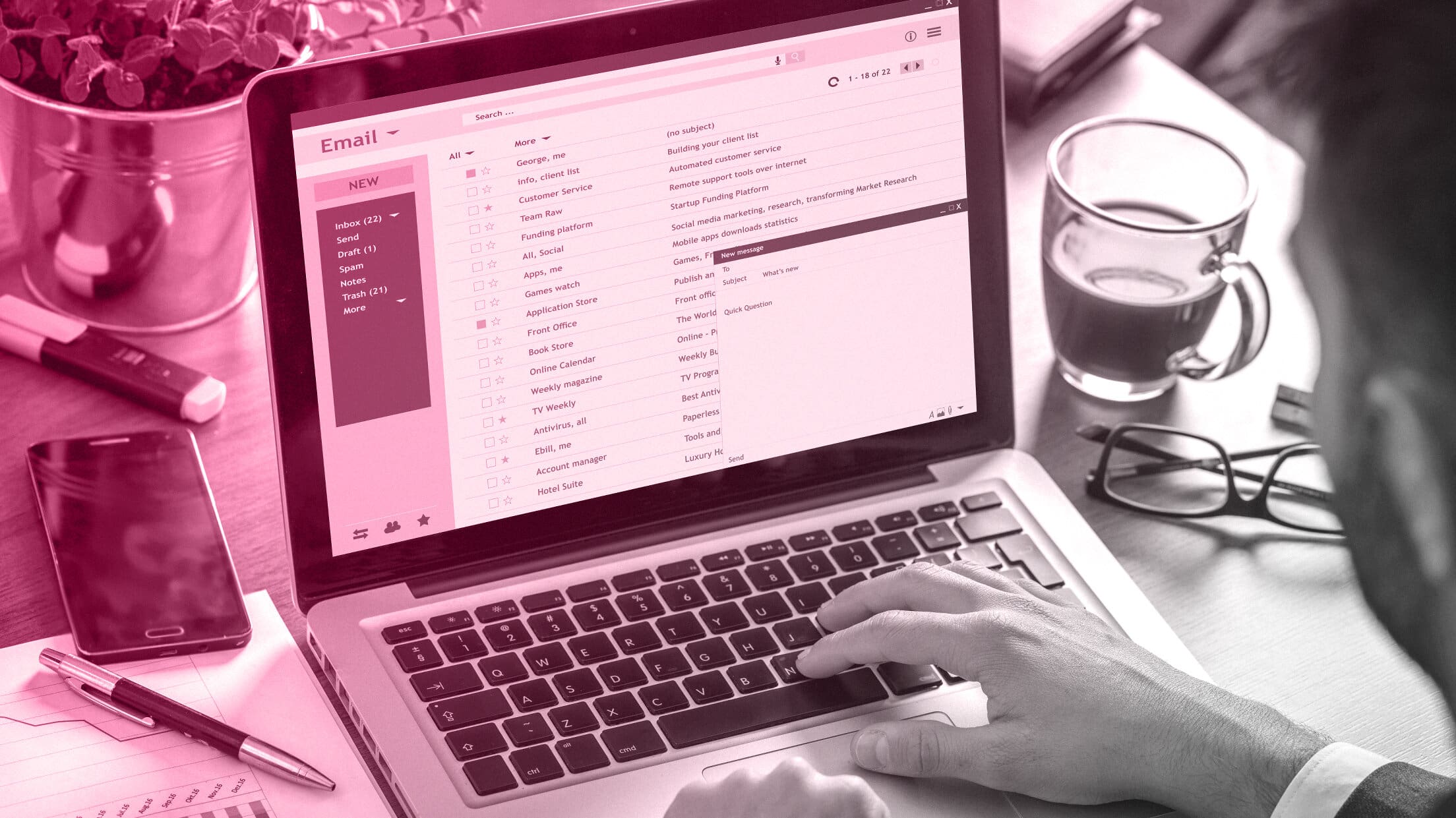


Remember when adding someone's first name to an email felt like personalization? Email marketing has come a long way since then. Today, AI can help brands understand customer behavior, recommend products, predict when someone might purchase again, and find better times to send messages. Tasks that once took hours of manual analysis can now happen much faster.
But does that mean AI can run your entire email strategy? Not quite.
As we head into 2027, the real opportunity is learning how to combine AI-powered insights with the creativity, empathy, and strategy that make emails worth opening.
Whether you're running an ecommerce brand, growing a B2B company, or managing marketing for a mission-driven organization, AI can help you send more relevant emails without adding more work to your team's schedule.
Here's what that looks like in practice.
What Is AI Email Marketing?
AI email marketing uses artificial intelligence and machine learning to help brands create, personalize, automate, and improve email campaigns based on customer data and behavior.
Instead of relying only on broad audience segments or fixed schedules, AI-powered tools can identify patterns and predict what different subscribers might find useful.
For example, AI can help you understand:
- Which customers are likely to purchase again
- What products someone may be interested in
- When subscribers are most likely to engage
- Which customers may be losing interest
- What content or offers are worth testing
- How different email sequences influence conversions
Platforms are connecting predictive analytics, content generation, and customer journeys into more sophisticated marketing systems.
The focus is shifting from automating individual tasks to improving the entire customer experience.
Does AI Actually Improve Email Marketing Results?
It can, and recent performance data gives us a better picture of where AI makes a difference. According to Klaviyo's 2026 research, top-performing campaigns that tested AI-powered personalized send times saw a 35% increase in click rates (1).
Klaviyo also found that automated email flows generated nearly 41% of email revenue from just 5.3% of total sends across more than 183,000 customer accounts (2).
These findings tell us something important. Better results do not necessarily come from sending more emails. They often come from sending timely, relevant messages connected to what customers actually need.
Of course, these results are not guaranteed. The 35% figure reflects top-performing tests, while the automation benchmark includes flows that are not necessarily AI-powered.
Still, the opportunity is clear: AI can help teams make smarter decisions about who to contact, what to say, and when to reach out.
5 AI Email Marketing Tactics Worth Using in 2027
You do not need to automate everything to benefit from AI. A few thoughtful improvements can make your email program more relevant and easier to manage.
1. Personalize Based on Behavior, Not Just Names
Personalization should help subscribers feel understood, not watched. AI makes it easier to move beyond basic details like first names or locations and consider what someone has actually shown interest in.
For an ecommerce brand, this might mean recommending products based on browsing and purchase history.
For a B2B company, it could mean sharing different educational resources with someone researching a solution versus someone comparing vendors.
The idea is simple: give people information that feels relevant to where they are.
Try this: Start with three segments: new subscribers, engaged subscribers, and customers who have not interacted recently. Then tailor one message to each group's needs.
2. Use Predictive Send Times
We've all received a great email at a bad time. Maybe it arrived overnight and disappeared under a dozen other messages. Or perhaps it showed up while we were busy and never made it back to the top of the inbox.
AI-powered send-time optimization helps reduce some of that guesswork.
Platforms like Klaviyo, Brevo, and ActiveCampaign can use historical engagement data to predict when subscribers are more likely to interact.
Klaviyo's Personalized Send Time, for example, can select delivery times for individual recipients rather than sending an entire campaign at one fixed hour.
That flexibility can help newsletters, product education, and loyalty campaigns.
However, predictive timing is not ideal for every message. A flash sale ending at midnight still needs a clear, reliable delivery window.
Try this: Test predictive sending against your usual schedule for a recurring campaign. Compare clicks and conversions, not just opens.
3. Make Promotions More Relevant
Not everyone needs a discount to buy. Some customers care about convenience. Others want product education, early access, better shipping options, or reassurance that they're making the right choice.
AI can help identify these differences using purchase history, engagement patterns, and predicted buying behavior.
Imagine a skincare brand preparing to launch a new product. A loyal customer might appreciate early access. Someone browsing a product for the first time may need an explanation of its ingredients. A previous buyer may respond better to a refill reminder.
Sending the same promotional email to all three overlooks what makes each relationship different.
Try this: Before creating a promotion, ask what each audience segment needs to feel ready to act. Then test offers against educational or value-focused messages.
4. Create and Test Content Faster
AI writing tools can help you brainstorm subject lines, draft email variations, summarize campaign insights, and adapt existing content.
That makes them particularly useful for small teams balancing multiple campaigns.
For example, you could ask an AI assistant to draft three subject lines for the same email:
- Benefit-focused: A simpler way to manage your weekly workflow
- Question-focused: Spending too much time on manual reports?
- Curiosity-focused: One small change that could save your team time
From there, your team can choose the strongest options and test them.
But AI-generated content still needs a human editor.
Your brand voice, customer understanding, and sense of what feels appropriate turn a usable draft into a message people genuinely connect with.
AI can help you write faster. Your team still decides what's worth saying.
5. Improve Frequency and Customer Journeys
How many emails should you send? There's no universal answer.
Someone actively comparing products may appreciate a few helpful follow-ups. A longtime customer who recently purchased may prefer fewer promotional messages and more useful product information.
AI can help identify engagement patterns, purchase likelihood, and churn risk, making it easier to adapt communication over time.
This is particularly valuable for automated journeys such as:
- Welcome sequences
- Browse and cart abandonment
- Post-purchase education
- Replenishment reminders
- Customer winback
- Loyalty communications
Rather than constantly adding campaigns to your calendar, focus on making these existing journeys more useful.
Best AI Email Marketing Tools to Consider
The right platform depends on your business, available customer data, budget, and how much automation your team actually needs.
Here's how four popular options compare as of October 2026.
| Platform | Key AI capabilities | Best fit | What to consider |
| Klaviyo AI | Predictive analytics, product recommendations, personalized send times, AI campaign assistance | Ecommerce and B2C brands with detailed customer data | Advanced AI features may require additional plans |
| Mailchimp | AI-assisted content, predictive purchase insights, segmentation, send-time optimization | Small businesses and growing marketing teams | Some predictions require connected store data and sufficient history |
| Brevo | Aura AI assistant, content generation, AI segmentation, send-time optimization | Small businesses seeking email and broader customer communication tools | AI features vary by plan |
| ActiveCampaign | Active Intelligence, AI campaign creation, predictive sending, automation building | B2B brands and businesses with complex customer journeys | Advanced automation requires thoughtful setup and maintenance |
One important distinction: not every platform uses send-time optimization in the same way. Some identify a good time for the audience overall; others can personalize timing by recipient.
Before choosing a tool, ask yourself what you actually need help with.
Is your team struggling to create campaigns? Are your automations underperforming? Do you have enough customer data to support predictions? Are you trying to improve conversions or simply save time?
Those answers should guide the decision more than a long feature list.
How to Introduce AI Into Your Email Strategy
You don't need to rebuild your email program overnight. A better approach is to start with one problem, test a solution, and build from there.
Step 1: Audit your current emails
Review your welcome series, campaigns, automated flows, segmentation, and recent performance. Look for opportunities to improve timing, relevance, and conversion.
Step 2: Choose one AI use case
Start with something manageable, such as testing subject lines, improving send times, or personalizing a winback email. Avoid changing everything at once. You want to understand what actually makes a difference.
Step 3: Check your data
Predictive tools depend on the information available to them. Make sure subscriber consent, purchase events, CRM fields, website activity, and audience segments are accurate and appropriately collected.
Step 4: Run a controlled test
Compare your updated approach with an existing campaign or control group. Keep other variables as consistent as possible so you can evaluate the change fairly.
Step 5: Review and refine
Give the test enough time and volume to produce meaningful results. If performance improves, expand gradually. If it doesn't, look at the content, audience, offer, and timing before assuming the technology is the problem.
What Should Brands Measure?
AI email marketing should improve business results, not just make your dashboard look more impressive.
Useful metrics include:
- Click rate
- Conversion rate
- Revenue per recipient
- Automation-generated revenue
- Repeat purchase rate
- Customer lifetime value
- Unsubscribe and spam complaint rates
- Time saved on campaign production
Open rates can still provide context, but they are less reliable because of privacy features such as Apple Mail Privacy Protection.
Focus on what happens after someone receives the email. Did they click? Did they purchase, reply, book, donate, or take another meaningful action?
Those outcomes tell you more about whether your email strategy is working.
Common AI Email Marketing Mistakes to Avoid
AI can make email marketing more efficient, but it can also make poor decisions faster if no one checks the work.
Some mistakes worth watching for include:
- Using AI-generated copy without reviewing accuracy or tone
- Personalizing with sensitive information customers did not expect you to use
- Relying on predictions built from incomplete data
- Sending more emails simply because automation makes it easy
- Treating predictive recommendations as guaranteed results
- Ignoring deliverability, consent, and unsubscribe preferences
- Measuring productivity instead of customer outcomes
You also can't skip the technical foundation. Email authentication, list hygiene, accessible design, and clear unsubscribe options still matter, regardless of how advanced your AI tools become.
The technology should help you build better relationships, not make your communication feel intrusive.
Key Takeaways
As we prepare for 2027, brands have access to tools that can predict behavior, improve timing, personalize recommendations, and make campaign production easier.
But the most important part of email marketing hasn't changed.
People want messages that feel relevant, helpful, and worth their time.
AI can help brands better understand those needs, but it still takes human insight to turn the data into meaningful communication.
Start with one improvement. Test it. Learn from your audience. Build on what works.
At Colibri Digital Marketing, we help businesses create email marketing strategies that combine intelligent automation with human-centered communication. Schedule a complimentary session to build a tailored email strategy that strengthens customer relationships and supports sustainable growth.