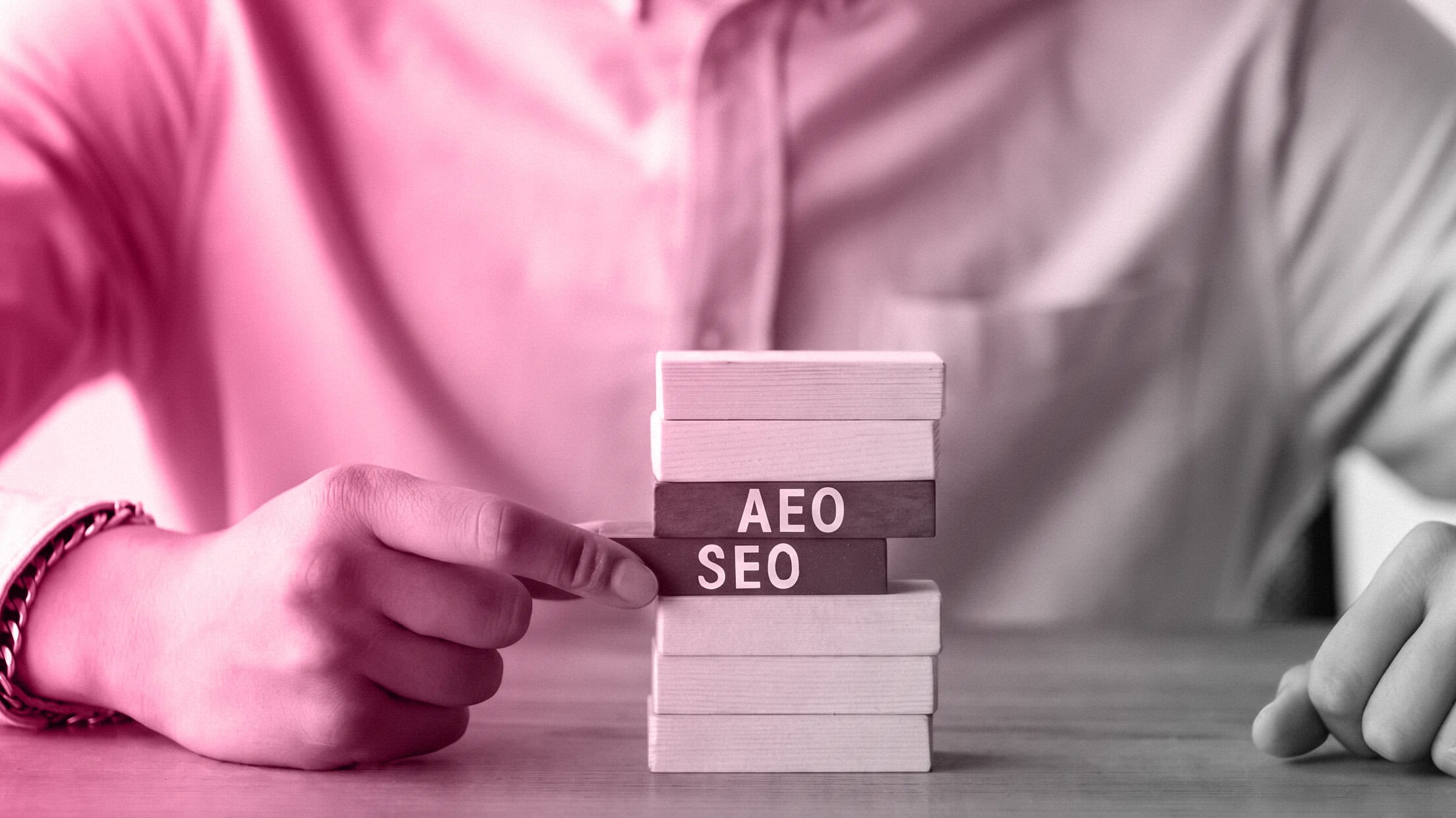


For years, most digital marketing teams focused on one big question: how do we show up on Google? That question still matters. But now, people are asking AI assistants, reading AI-generated summaries, using voice search, scanning featured snippets, and expecting fast, clear answers before they ever click a website. That shift is why the conversation around SEO vs AEO has become so important.
SEO helps your content get discovered in search engines. AEO helps your content become the answer people and AI-powered tools can understand, trust, and use.
The two are connected. AEO does not replace SEO. It builds on it.
What Is SEO?
SEO stands for search engine optimization. It is the process of improving your website and content so search engines can discover, understand, rank, and show your pages to people searching for relevant topics.
Strong SEO usually includes:
- Keyword research
- Technical website health
- Helpful content
- Internal linking
- Metadata
- Site structure
- Mobile usability
- Page speed
- Backlinks
- Topic authority
- User experience
At its core, SEO is about visibility.
It helps your brand appear when people are actively looking for information, products, services, or solutions. A strong SEO strategy brings qualified people to your website and gives them a reason to keep exploring.
What Is AEO?
AEO stands for answer engine optimization. It focuses on making your content clear, structured, and trustworthy enough to be used as a direct answer.
Answer engines can include AI assistants, voice assistants, featured snippets, AI Overviews, chat-based search tools, and other experiences where users receive a summarized response instead of only a list of links.
AEO is about answerability.
It asks:
- Can this content answer a specific question clearly?
- Is the answer easy to find on the page?
- Is the information accurate and trustworthy?
- Is the structure easy for search systems and AI tools to understand?
- Does the content provide enough context to be useful?
- Would someone feel confident after reading the answer?
AEO matters because people increasingly want quick, reliable guidance. They may not always want to click through five different pages to compare definitions, steps, requirements, or recommendations.
That does not mean long-form content is dead. It means long-form content needs to be easier to navigate, summarize, and trust.
SEO vs AEO: What’s Actually Different?
SEO vs AEO overlap, but they are not the same.
Here is the simplest way to think about it:
| Area | SEO | AEO |
| Primary goal | Rank pages and drive organic traffic | Provide clear answers that can be surfaced directly |
| Main focus | Keywords, rankings, clicks, authority | Questions, clarity, structure, trust |
| Content style | Comprehensive and topic-rich | Direct, concise, and answer-focused |
| Common formats | Blogs, landing pages, service pages, guides | FAQs, definitions, snippets, summaries, how-to answers |
| Success signals | Rankings, traffic, impressions, backlinks, conversions | Citations, answer visibility, featured snippets, AI mentions, assisted conversions |
| User behavior | People browse results and click | People ask questions and expect immediate answers |
The important thing is that these strategies should support each other. If SEO gets people to the door, AEO helps them quickly understand why they should trust you.
Why SEO Alone May Not Be Enough Anymore
Traditional SEO still matters, but search behavior is changing (1).
People are asking more conversational questions. They want comparisons, recommendations, summaries, and next steps. They are using AI tools to make sense of complex decisions faster.
This changes how content needs to work.
A blog that ranks well but takes too long to answer the main question may lose value. A service page that sounds polished but does not explain pricing, process, benefits, or next steps may feel incomplete.
In other words, visibility is not enough. Your content also needs to be easy to understand.
This is especially important for brands with complex or trust-sensitive offers. If you work in healthcare, sustainability, finance, technology, or social impact, your audience may need more than a catchy headline. They need clear explanations, proof points, credible claims, and practical guidance.
How to Win at Both SEO and AEO
Winning at both SEO and AEO starts with building content for real people first, then structuring it so search systems can understand it.
Here is where to focus.
Start with real questions, not only keywords
Keyword research is still useful, but it should not be the only input.
Look at the questions your audience actually asks during sales calls, consultations, demos, onboarding, customer support conversations, and social media interactions.
For example, instead of only targeting “sustainable packaging,” ask:
- What is sustainable packaging?
- Is compostable packaging actually better?
- How much does sustainable packaging cost?
- What should small ecommerce brands consider before switching?
- What mistakes should brands avoid?
These questions help you create content that matches real decision-making, not just search volume.
Give direct answers early
AEO rewards clarity. Readers do too.
If someone lands on a blog asking “What is AEO?” they should not need to scroll through eight paragraphs before getting an answer.
Use short, direct explanations near the top of your content. Then expand with examples, context, and next steps.
This does not make your content less thoughtful. It makes it more useful.
A simple structure works well:
- Answer the question
- Explain why it matters
- Add context
- Give examples
- Share practical next steps
That flow supports both skimmers and deeper readers.
Use headers that match search intent
Headers should help people understand the page at a glance.
Instead of vague headers like “The New Landscape,” use headers that answer real questions, such as:
- What is AEO?
- How is AEO different from SEO?
- Why does answer engine optimization matter?
- How do you optimize content for AI search?
- What mistakes should brands avoid?
Clear headers make content easier to scan. They also help search engines and AI systems understand the page structure.
Add FAQs with genuinely useful answers
FAQs are one of the easiest ways to support both SEO and AEO.
A strong FAQ section should answer practical, commonly searched questions in plain language. Avoid using FAQs as a place to stuff keywords or repeat the same point from the blog.
Good FAQs should help readers take the next step.
For example:
- “Is AEO replacing SEO?”
- “How do I know if my content is answer-friendly?”
- “Should every blog have an FAQ section?”
- “How do I measure AEO performance?”
Each answer should be concise, but not empty. The goal is to reduce confusion and build confidence.
Structure pages for humans and machines
Good structure improves readability, accessibility, SEO, and AEO.
Use:
- Clear H2 and H3 headings
- Short paragraphs
- Bullets where helpful
- Descriptive internal links
- Concise summaries
- Schema markup where appropriate
- Helpful images with alt text
- Clear metadata
- Logical page hierarchy
The goal is to make your content easy to navigate.
When a page is organized well, people stay longer, search engines understand it better, and AI-powered tools have clearer information to work with.
Build trust into the content
AEO is not just about short answers. It is also about credibility.
If your content makes claims, support them. You offer advice? Explain the reasoning. If you describe results, provide context. Or, if you discuss sensitive topics, be careful and specific.
Trust signals can include:
- Case studies
- Expert quotes
- Customer examples
- Methodology notes
- Reviews
- Certifications
- Original insights
- Transparent limitations
- Updated information
This is especially important for health, financial, sustainability, and social impact brands, where audiences often need reassurance before taking action.
For Real Life: How to Optimize One Blog for SEO and AEO
Imagine you are writing a blog called “How to Choose a Healthcare Marketing Agency.”
A traditional SEO approach might focus on the keyword, related terms, metadata, internal links, and a comprehensive explanation of what to look for.
That is a strong start.
To make the same blog stronger for AEO, you would also add direct answers to common questions throughout the piece.
For example, near the top, you might include a short definition: A healthcare marketing agency helps health-focused organizations attract, educate, and convert the right audiences while navigating trust, compliance, and sensitive decision-making.
Then you could organize sections around practical questions:
- What should a healthcare marketing agency understand?
- How do you compare agencies?
- What questions should you ask before hiring one?
- What red flags should you watch for?
- How much support do you need?
You might also add a checklist, a short comparison table, and an FAQ section.
That same blog can now serve multiple purposes. It can rank in traditional search, answer specific questions, support AI-generated summaries, help sales teams, and give real buyers a clearer path forward.
That is the sweet spot between SEO vs AEO.
Common Mistakes to Avoid
The biggest mistake is treating AEO like a quick trick.
It is not enough to add a few FAQs to a thin blog and expect results. AEO works best when the content is genuinely useful, well-structured, and supported by a strong website (2).
Other common mistakes include:
- Writing for algorithms instead of people
- Creating generic answers with no original insight
- Burying the main answer too far down the page
- Using vague headers that do not match user questions
- Adding structured data that does not match visible content
- Ignoring technical SEO
- Forgetting internal links
- Publishing outdated information
- Overusing AI-generated copy without editing for accuracy and voice
The safest approach is also the most sustainable one: be useful, be clear, be specific, and keep your content current.
A Simple SEO and AEO Checklist
Before publishing a blog, service page, or resource, ask:
- Does this target a clear keyword or topic?
- Does it answer a real audience question?
- Is the main answer easy to find?
- Are the headers clear and specific?
- Does the content include practical examples?
- Are FAQs included where helpful?
- Are internal links supporting the next step?
- Is the metadata clear and compelling?
- Is the page technically crawlable?
- Is structured data used appropriately?
- Are claims accurate and supported?
- Would a real person feel more confident after reading this?
If the answer is yes, you are building content that can perform in both traditional and AI-powered search experiences.
Key Takeaways
The conversation around SEO vs AEO is not about choosing one strategy and abandoning the other.
SEO helps people discover your content. AEO helps them get clear answers from it.
Together, they create a stronger search experience.
A smart strategy should combine technical SEO, helpful long-form content, direct answers, clear structure, useful FAQs, internal links, and trustworthy proof points.
Ready to build a search strategy that supports both visibility and trust? Schedule a complimentary session to create a tailored SEO and AEO strategy that helps your audience find, understand, and choose you with confidence.